
Massage Therapy for Back and Neck Tension: What to Expect
If your neck feels tight after a long day at your desk, or your back feels stiff after spending too much time in the car, you’re not alone.
Muscle tension can build up slowly, and then you suddenly feel it all at once.
You may notice a sore spot between your shoulder blades, tightness through your lower back, or a neck that just doesn’t want to turn as easily as it used to.
Sometimes you know exactly what caused it.
Other times, you just wake up one morning and think, “Why does everything feel so tight?”
Massage therapy can be a helpful way to address everyday muscle tension and discomfort.
At Riverbend Chiropractic & Wellness, we take a therapeutic approach to massage therapy. That means your appointment isn’t simply about getting on the table and having someone work on the area that hurts. And it isn’t about the “spa experience.”
It starts with figuring out what your body actually needs.
What can massage therapy help with?
Massage therapy can help you manage muscle tension and discomfort in areas such as:
- Neck and shoulders
- Upper back
- Lower back
- Hips and glutes
- Arms and forearms
- Legs
For many people, the goal is simple:
Loosen up. Move better. Feel more comfortable.
You might book a massage because your neck has been tight for weeks. Maybe your lower back gets sore after sitting at work. Or perhaps you’re active and your muscles feel stiff after training.
Massage can also be part of a broader treatment plan that includes chiropractic care, acupuncture or rehabilitation when appropriate.
Your massage starts before you get on the table
One of the most important parts of a good massage therapy appointment happens before the hands-on treatment begins.
Your massage therapist will talk with you about what you’re experiencing, when it started and anything that may be contributing to it.
We’ll want to know about previous injuries, ongoing areas of discomfort, your daily activities and what you’d like to accomplish with treatment.
Depending on your concerns, your massage therapist may also look at your movement or perform specific orthopedic testing.
This gives us a better idea of what may be contributing to your symptoms and helps us build a treatment plan with you.
You’re not just getting a massage. You’re getting a massage that’s been planned around you.
The first few minutes we slow things down
Once treatment begins, your massage therapist may not immediately start digging into the tightest muscle.
There’s a reason for that.
Your nervous system plays an important role in how your muscles respond to touch and pressure. If your body feels threatened or guarded, pushing harder isn’t going to make things better.
Instead, your massage therapist may begin with slow, intentional techniques designed to help you relax and become more comfortable with the treatment.
We may use guided breathing, gentle rocking and slow hands-on work to assess how your body is moving and how your tissues feel.
Breathing can be particularly useful.
It helps you settle into the treatment while also giving your massage therapist information about how your rib cage, spine and surrounding muscles are moving.
Your massage therapist is also paying attention to things you may not notice yourself, such as the position of your shoulders, shoulder blades, spine and head.
Think of this part of the appointment as putting together the pieces of a puzzle.
Once we have a better understanding of what’s going on, we can decide where to focus the rest of your treatment.
Why your massage therapist may not start with deep pressure
If you’ve ever had a massage where the therapist immediately went after the tightest spot, you may wonder why a therapeutic massage can sometimes feel slower at the beginning.
It’s because your tissues need to be ready for the work.
Your massage therapist may begin with broader, slower techniques before moving into more focused treatment.
We often use myofascial techniques, Swedish massage, gentle mobilization and other approaches depending on what we find during your assessment.
The goal is to gradually prepare your tissues rather than simply applying as much pressure as possible.
And if you’ve ever thought that a massage has to hurt to work, that isn’t the case.
In fact, if your massage is too painful and you start resisting or tensing further, it will likely not be as helpful and may cause more soreness.
Myofascial techniques and cupping
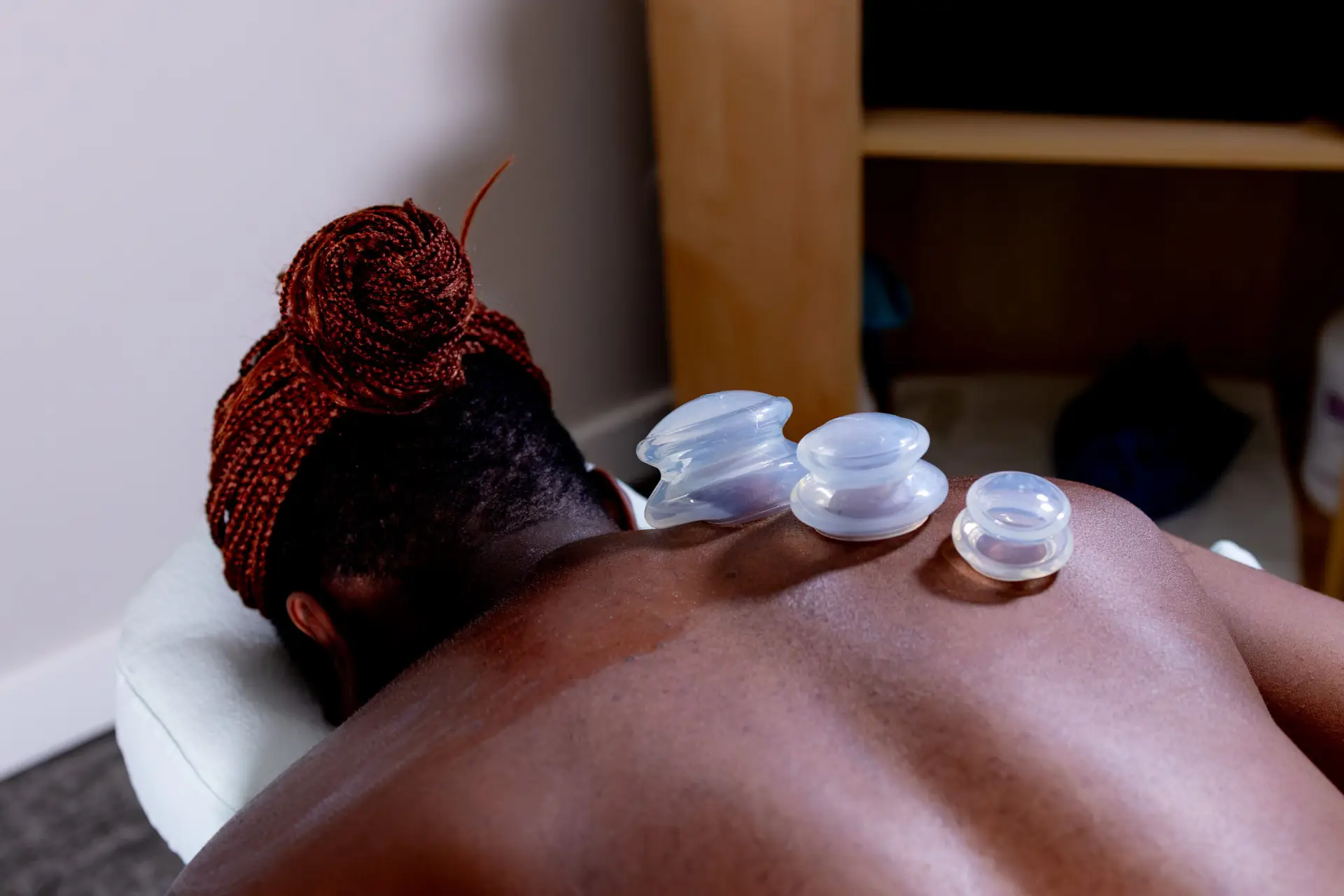
Depending on your treatment plan, your massage therapist may use techniques that focus on the connective tissues surrounding your muscles.
Myofascial techniques use slow, deliberate pressure and movement to work through areas that feel restricted or dense.
Another option is myofascial cupping.
Instead of compressing the tissues, cupping uses negative pressure to gently lift the skin and underlying tissues.
You may see circular marks afterward. These are a normal response to cupping and generally fade over several days.
Cupping can be particularly useful if you spend a lot of time sitting, especially when tension builds through your upper back and shoulders.
Your massage therapist will explain what we’re doing and why before we use it.
Swedish massage: warming up the tissues
Once your tissues are ready, your massage therapist may incorporate Swedish massage techniques.
These are the longer, rhythmic strokes many people associate with massage therapy.
They can help warm the tissues while also giving your massage therapist another opportunity to assess how your muscles are responding.
We may work broadly through your back and shoulders before gradually becoming more specific.
This is where your massage can begin to feel less like a general relaxation massage and more like targeted therapeutic care.
Targeted treatment for tight muscles
Once we’ve prepared your body and muscles, your massage therapist can focus on the areas that need more attention.
Depending on your symptoms, this may include:
- Focused work through the muscles around your shoulder blades
- Deep but controlled pressure through your glutes
- Specific work through the muscles alongside your spine
- Trigger point techniques through your upper shoulders and between your shoulder blades
- Mobilization of your shoulder blade and shoulder
- Gentle movement of your ribs and spine
- Pin-and-stretch techniques for particularly tight muscles
For neck tension, your massage therapist may also use techniques around the base of your skull and upper shoulders.
We’ll adjust the pressure and techniques throughout your appointment based on how your body responds.
Communication is a big part of this process.
If something feels too intense, tell us.
If an area feels particularly helpful, tell us that too.
Your feedback helps us guide your treatment.
What if I have back or neck pain?
Massage therapy can be useful when muscle tension is contributing to everyday back or neck discomfort.
For example, you may spend eight hours a day at a computer and develop tension through your neck, shoulders and upper back.
Maybe you spend your weekends gardening, golfing or working around the house and notice more tension through your lower back and hips.
Or perhaps you’re active and develop tightness after training.
Your treatment can look different from someone else’s because the reason behind your tension can be different.
That’s why we don’t believe in treating everyone with the exact same massage.
Does massage therapy hurt?
Therapeutic massage does not have to be painful to be effective.
Some areas may feel tender or sensitive, especially when a muscle is particularly tight.
You may feel pressure, stretching or a deeper sensation as your massage therapist works through an area.
But there’s a difference between therapeutic pressure and simply making you tolerate pain.
Your massage therapist wants to know what you’re feeling.
If the pressure is too much, speak up. We can change the technique.
There is no prize for tolerating the most uncomfortable massage.
Our goal is to provide treatment that is appropriate for your body and your goals.
What should I expect after my massage?
Many people feel relaxed and notice that their muscles feel looser after their massage.
Your massage therapist may also recommend a few simple things to do between appointments.
That might include stretches, heat or cold, movement recommendations and other forms of self-care.
The idea is to help you maintain the changes you worked on during your appointment rather than simply feeling better for a few hours.What you do during the other 23 hours of the day (and other 29 days of the month) matter!
Your massage therapist can also talk with you about whether another appointment makes sense and what a reasonable timeline might look like.
Some people use massage occasionally when they feel particularly tight.
Others benefit from regular treatment as part of their overall approach to managing muscle tension and staying active.
How often should I get a massage?
There’s no universal rule.
It depends on why you’re getting massage therapy in the first place.
If you have occasional muscle tension from work, travel or activity, you may only need treatment from time to time.
If you’re dealing with persistent tightness or regularly putting significant demands on your body, more consistent treatment may be useful.
Your massage therapist can help you determine what makes sense based on your symptoms, goals and response to treatment.
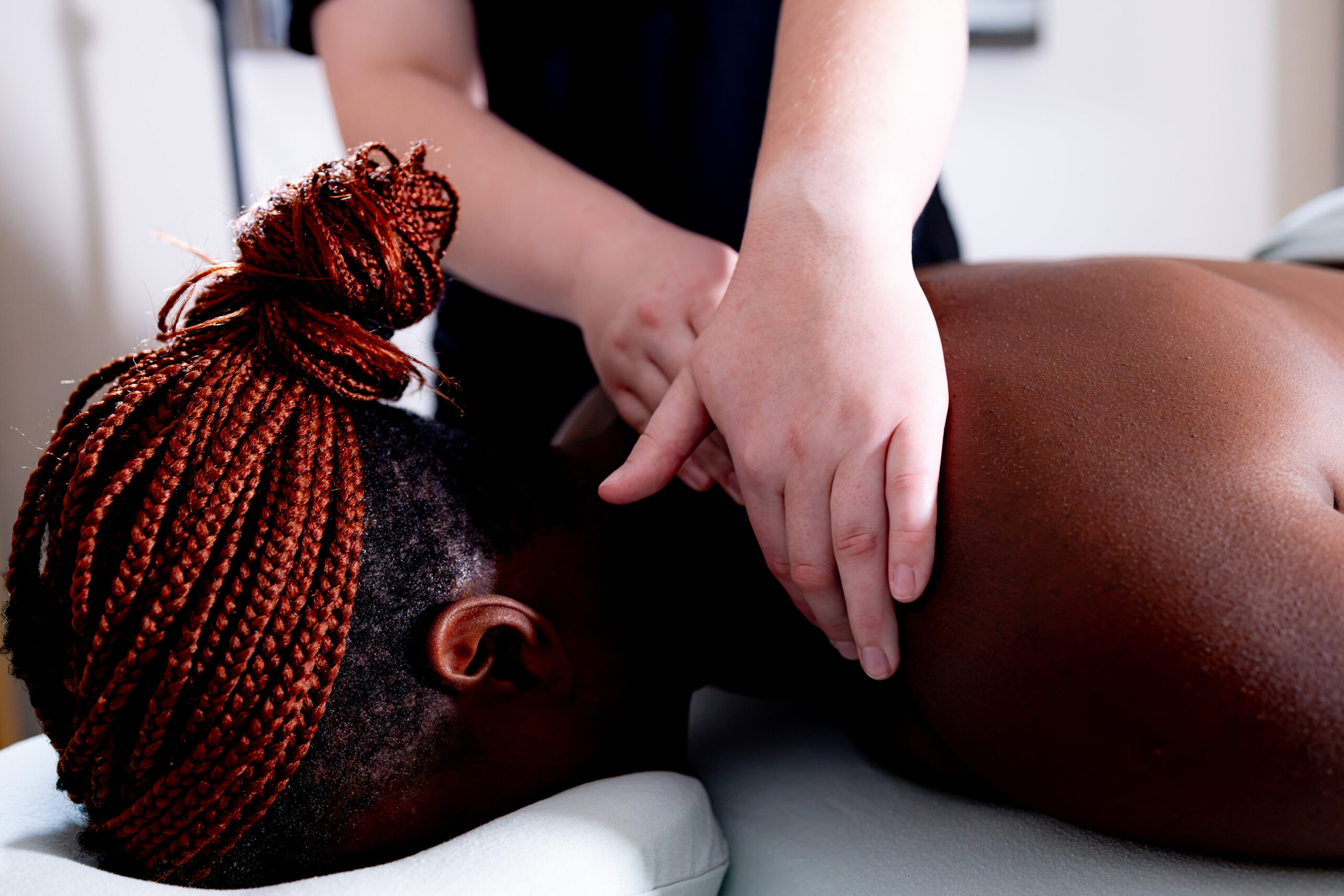
Massage therapy at Riverbend Chiropractic & Wellness
At Riverbend, we want your massage therapy appointment to feel personalized from beginning to end.
That starts with a conversation.
Your massage therapist will listen to what you’re experiencing, assess what’s going on and explain the treatment plan before getting started.
From there, we’ll move from slower, calming techniques into more focused therapeutic work when appropriate.
Throughout your appointment, your massage therapist is paying attention to how your body responds.
It’s not about seeing how much pressure you can tolerate. It’s about finding what your body responds to and using the right techniques for you.
That’s what makes therapeutic massage different from simply booking a standard massage.
Ready to loosen up?
If your neck, shoulders or back have been feeling tight, massage therapy is a great place to start.
You don’t have to wait until the tension or pain becomes unbearable.
Whether you’re dealing with a stiff neck from working at a desk, a sore back from everyday life or tight muscles from staying active, our massage therapists can help you understand what’s going on and build a treatment around your needs.
Book a massage therapy appointment at Riverbend Chiropractic & Wellness in Edmonton and let us help you feel more comfortable and move easier.